
Wind energy: a consolidated industry
Wind energy is one of the most consolidated renewable energy sources in the global energy landscape. Over the past three decades it has evolved from an experimental technology into a cornerstone of the energy transition, with over 1,000 GW of installed capacity worldwide.
In some countries, wind energy contributes approximately 25% to the national energy mix, with historical production peaks reaching up to 56% of electricity demand at certain moments. This level of penetration demonstrates both the maturity of the technology and the critical importance of having well-trained professionals managing these assets.
An extraordinary technological evolution
The rapid technological evolution of the wind energy sector has been remarkable. In just 30 years, wind turbines have grown from 50–100 kW units with 15-meter rotors to machines rated at 15–21 MW with rotor diameters exceeding 230 meters. This transformation has created a highly specialized industrial ecosystem spanning component manufacturing, installation, commissioning, and the operation and maintenance of wind farms.
Control systems have evolved from simple mechanical regulation mechanisms to sophisticated real-time algorithms that optimize production, protect the machine, and contribute to electrical grid stability. Understanding this evolution is essential for any professional in the sector.
Why training matters
Safety-critical operations
Wind turbines are complex industrial installations operating under demanding conditions: heights exceeding 100 meters, medium and high voltage electrical systems, and rotating mechanical components. Proper training is indispensable to ensure the safety of technicians and operators.
Operational efficiency
A well-trained operator can correctly interpret SCADA signals, diagnose anomalies in real time, and make decisions that maximize wind farm availability and production. The difference between an experienced operator and a novice can translate into a 3–5% production increase.
Cost reduction
Preventive maintenance based on deep knowledge of machine behavior allows anticipating failures, reducing unplanned downtime, and extending component lifespan. This has a direct impact on the project's LCOE (Levelized Cost of Energy).
Complex multi-disciplinary systems
Modern wind turbines integrate aerodynamics, structural mechanics, power electronics, electrical machines, meteorology, and advanced control theory. Professionals need a solid cross-disciplinary foundation to work effectively in this industry.
What ACMSL offers
Automated Computing Machinery SL (ACMSL) has developed a unique set of training tools for the wind energy sector:
- 4 real-time simulators covering the main families of industrial wind turbines — from SCADA control center operations to detailed DFIG wind turbine management.
- Integrated tutorials within each simulator, with guided practical exercises.
- Engineering tools including the Operational Curve Calculator (MPPT) and the DFIG Back-to-Back Analyzer.
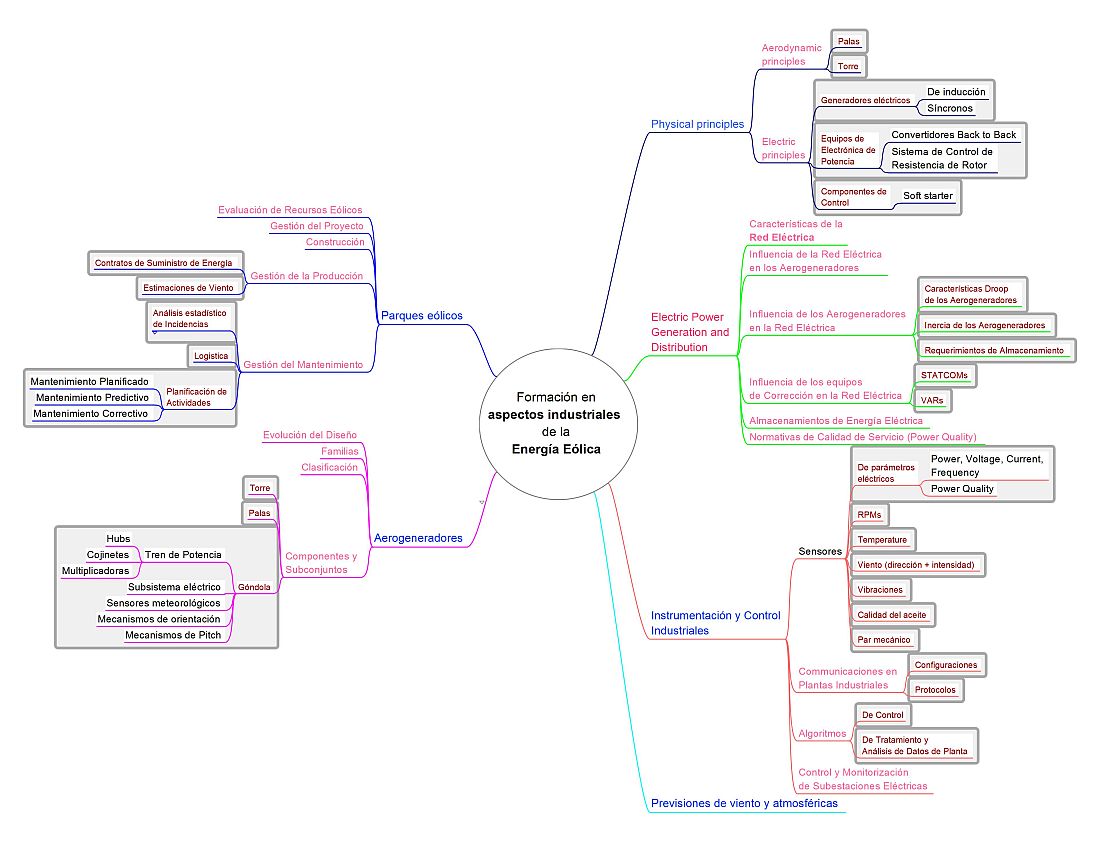
- Comprehensive knowledge map covering all industrial aspects of wind energy, from meteorology to project finance.
Recommended learning path
We recommend following these tutorials in order. Start by learning about industrial wind turbines, then explore the 5 families of wind turbines and the operational wind speed ranges. After that, discover the available simulators and engineering tools and the comprehensive knowledge map.
For hands-on practice, we recommend starting with the Active Stall simulator (Family 2) to master fundamental concepts, then progressing to the Rotor Resistance Controller (Family 3), and finally tackling the DFIG simulator (Family 4) — the most widely installed wind turbine type today.
Try our real-time simulators
Free 2-day evaluation — no commitment, no complex installation
Download simulators